Last edited on 3 Feb 2024. View history
Sesame
 Sesame
How to sow sesame: Direct seed outdoors after soil temperatures are above 21.1° C
Sun requirement for sesame: Plant in Full Sun
Sesame is an upright, annual flowering plant grown for it's seeds, which are known as sesame seeds and have one of the highest oil contents among seeds. The plant has alternate leaves and white, blue, or purple tubular flowers. It's fruits are deeply grooved capsules 2-8cm long, with 50-100 seeds. Pods naturally split open when ripe to release the seeds. This shattering can result in seed loss, and some non-shattering cultivars exist. Sesame seeds are small, usually 3-4 mm long, ovate, and slightly flattened. Depending on the cultivar, they can be tan, gold, reddish, brown, gray, or black. Seeds have a rich, nutty flavor and are used in a wide variety of cuisines. Sesame grows best in warmer conditions, around 23° C. It is drought-tolerant once established, but requires water for germination and has better yields with sufficient water.
- 0
- plantings
- 0
- harvests
- 0
- seed packets

Sesame facts
Lifespan
Height
100cmRow Spacing
45cmCrop cycle
Max altitude
Optimal light
What are growing degree days?
A plant grows with warmth, not with days. A growing degree day is one day's worth of useful warmth: how many degrees the day's average temperature is above the lowest temperature the crop grows at. Add them up from planting and you know how far along the crop is, whatever the calendar says.
Say that lowest temperature is 10°C. A day averaging 17°C gives 7 growing degree days. A day averaging 8°C gives none, as it is too cold for the crop to grow. That is why the same lettuce takes about 50 days in a summer and 90 in an autumn: it needs the same total warmth either way.
For sesame, the FAO EcoCrop database gives a lowest growing temperature of 10°C and a shortest growing cycle of 40 days at its best temperature, about 600 growing degree days to a first harvest.
Where you've told us where your garden is, we use this and the weather there to predict when your sesame will be ready to harvest. We don't use it for how long a plant lives or when it finishes: we go by what members have logged for that.

Photos
 Photos
Sesame crops
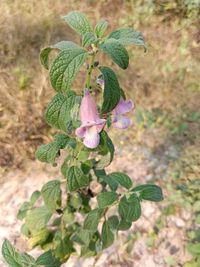
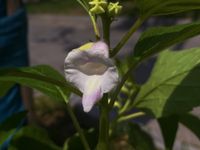
What people are saying about sesame
Nobody has posted about sesame yet.
Sign in or sign up to post your tips and experiences growing sesame.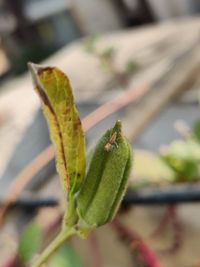
Who's planted sesame
Nobody has planted this crop yet.
Sign in or sign up to track your sesame plantings.Sesame harvests
Nobody has harvested this crop yet.
Sign in or sign up to track your sesame harvests.Find sesame seeds
There are no seeds available to trade on Growstuff right now.
- Purchase seeds via Ebay
- Sign in or sign up to list your seeds to trade.
Ecological requirements
Data from the FAO EcoCrop database for Sesamum indicum L.
| Family / Taxonomy | Magnoliopsida Asteridae Scrophulariales Pedaliaceae |
|---|---|
| Life form | herb |
| Life span | annual |
| Habit | erect |
| Optimal soil depth | deep (>>150 cm) |
| Optimal soil texture | medium |
| Optimal soil fertility | moderate |
| Optimal soil drainage | well (dry spells) |
| Optimal soil salinity | low (<4 dS/m) |
| Photoperiod | short day (<12 hours), neutral day (12-14 hours), long day (>14 hours) |
Learn more about sesame
Resources outside Growstuff.
