Last edited on November 29, 2025. View history
Jerusalem Artichoke
 Jerusalem Artichoke
How to sow Jerusalem artichoke: Direct seed tubers outdoors
Sun requirement for Jerusalem artichoke: Plant in Full Sun
The Jerusalem Artichoke, or Sunchoke, is a herbaceous perennial plant in the Helianthus genus, which also includes sunflowers. It is native to North America and was a food source for indigenous peoples before the arrival of European colonizers. The plant is grown for its edible tuber, which is used as a root vegetable. Tubers vary in shape, size, and color depending on the variety, but generally resemble a lumpy, uneven ginger root 7.5-10cm long. Skin can be pale brown, white, red, or purple. Above ground, the plant resembles a sunflower, with a tall, hollow stem, yellow ray flowers 5-10cm in diameter, and rough, hairy leaves that are smaller higher up the stem. Jerusalem Artichoke is propagated by planting tuber pieces and benefits from heavy mulching. To focus the plant's energy on tubers rather than seed, remove the flowers. Harvest after the first frost. Plants can become invasive because they can propagate from even a small piece of tuber left in the soil. Jerusalem Artichoke is not a type of artichoke, but does taste like one. It has the texture of a potato, but has a sweeter, nuttier flavor when raw. It can be grated or sliced into salads, or steamed or roasted. Unlike potatoes, Jerusalem Artichokes store their carbohydrates as inulin (not insulin) rather than starch. Inulin cannot be broken down by the human digestive system, so bacteria in the colon metabolize it. This causes some people to experience flatulence or gastric pain after consuming it. It is a folk remedy for diabetes, can be used for pig forage, and makes a good companion plant for closer to the ground crops that benefit from partial shade.
- 8
- plantings
- 0
- harvests
- 0
- seed packets

Jerusalem artichoke facts
Lifespan
Height
300cmRow Spacing
45cmCrop cycle
Max altitude
Optimal light
What are growing degree days?
A plant grows with warmth, not with days. A growing degree day is one day's worth of useful warmth: how many degrees the day's average temperature is above the lowest temperature the crop grows at. Add them up from planting and you know how far along the crop is, whatever the calendar says.
Say that lowest temperature is 10°C. A day averaging 17°C gives 7 growing degree days. A day averaging 8°C gives none, as it is too cold for the crop to grow. That is why the same lettuce takes about 50 days in a summer and 90 in an autumn: it needs the same total warmth either way.
For Jerusalem artichoke, the FAO EcoCrop database gives a lowest growing temperature of 7°C and a shortest growing cycle of 80 days at its best temperature, about 1120 growing degree days to a first harvest.
Where you've told us where your garden is, we use this and the weather there to predict when your Jerusalem artichoke will be ready to harvest. We don't use it for how long a plant lives or when it finishes: we go by what members have logged for that.
How members grow Jerusalem artichokes
Sunniness
Planted from

Plant Jerusalem artichokes with
 spinach

Photos
 Photos
Jerusalem artichoke crops
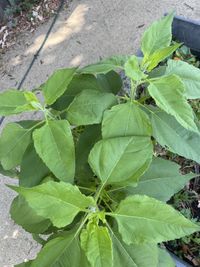
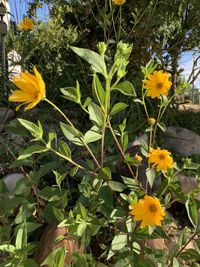
Video
Where Jerusalem artichokes grow
Only plantings by members who have set their locations are shown.
What people are saying about Jerusalem artichokes
Nobody has posted about Jerusalem artichokes yet.
Sign in or sign up to post your tips and experiences growing Jerusalem artichokes.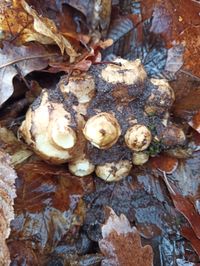
Who's planted Jerusalem artichokes
- Storm Garden · Portland, Oregon
- KnNBarley Garden
- vielmetti Garden · Ann Arbor, MI
- auwillia Around the garden shed · N Alaska, Portland,...
- lauravalentine potted randoms
Jerusalem artichoke harvests
Nobody has harvested this crop yet.
Sign in or sign up to track your Jerusalem artichoke harvests.Find Jerusalem artichoke seeds
There are no seeds available to trade on Growstuff right now.
- Purchase seeds via Ebay
- Sign in or sign up to list your seeds to trade.
Ecological requirements
Data from the FAO EcoCrop database for Helianthus tuberosus L.
| Family / Taxonomy | Magnoliopsida Asteridae Asterales Compositae |
|---|---|
| Life form | herb |
| Life span | perennial |
| Habit | erect |
| Optimal soil depth | medium (50-150 cm) |
| Optimal soil texture | medium, organic |
| Optimal soil fertility | moderate |
| Optimal soil drainage | well (dry spells) |
| Optimal soil salinity | low (<4 dS/m) |
| Photoperiod | short day (<12 hours) |
Learn more about Jerusalem artichokes
Resources outside Growstuff.
